

The importance of Wifi for modern education
 Esther Shaver Harnett, a board member and treasurer of Pat Conroy Literary Center heard the expression “Digital Equity” and “Digital Divide” and started on a quest to find out more after it was clear to her that it had to do with access to broadband services [especially] for school children. This project is Esther’s brainchild but we at PCLC are fully behind it. See below some data which touches on this major setback for some of our school children…
 Here below are a few paragraphs, some edited for brevity, from Alia Wong, an award-winning journalist based in Washington, D.C., who covers education, families, and related topics for The Atlantic Magazine. Born and raised in Hawaii, she formerly worked for Honolulu Civil Beat, where she reported on K-12 and higher education. She was the recipient of two national awards from the Education Writers Association for work she did for Civil Beat, including the first place prize for a diverse collection of education-related news articles and second place for a series she wrote on several charter schools on Hawaii‘s Big Island.

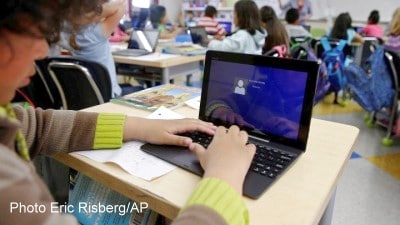 “In decades past, students needed little more than paper, pencils, and time to get their schoolwork done. Most schoolwork these days necessitates a computer and an internet connection, and that includes work to be done at home. One federal survey found that 70 percent of American teachers assign homework that needs to be done online; 90 percent of high schoolers say they have to do internet-based homework at least a few times a month. Nearly half of all students say they get such assignments daily or almost daily.
Yet despite the seemingly ever-growing embrace of digital learning in schools, access to the necessary devices remains unequal, with a new report from the Pew Research Center finding that 15 percent of U.S. households with school-age children lack high-speed internet at home. The problem is particularly acute for low-income families.”
With a team of researchers, the University of Texas at Austin professor S. Craig Watkins spent a year and a half observing and interacting with high schoolers to better understand the digital divide… …chronicles the ways low-income students of color get around not having access to the internet and a computer. In what Watkins calls “social hacking,” students often “reengineer their socioeconomic circumstances in order to get access to technology that they otherwise would not have access to.” … …Watkins says the digital divide is an “institutional blind spot” for many school leaders and policy makers.”
Alia’s full article is here: https://tinyurl.com/yd5scpv9
Your donation of $225.00 will provide a local schoolchild with a mobile hotspot device and two years of school related (only) internet service thus helping to level the digital playing field for low income students . But any donation you can afford to support this project will help and be greatly appreciated. If you donate on line (best way) please choose “Wifi Project” if you send a check to the center please mention the same in the memo field.